 >
Strategic IT Management: Is Your IT Provider Delivering It?
When Was the Last Time Your IT Provider Talked About Your Business?
Now think about this: when was the last time they sat down with you and talked about your business? Not your network. Not your tickets. Your business. Where it’s going. What risks are on the horizon. What technology investments make sense this year and which ones can wait.
If the answer is never, you’re getting maintenance. You’re not getting management. And the difference between the two is where the real value in an IT relationship lives.
The Missing Layer: Strategic IT Management
Good IT support is made up of three crucial layers: reactive, proactive, and strategic. Most providers deliver the first. Better ones deliver the second. Very few deliver the third.
The strategic layer is account management. It’s a dedicated person in your provider’s team who knows your business, understands your goals, and translates that into a technology plan. Not a generic plan. Your plan. Built around your risks, your budget, and your priorities.
What strategic IT management looks like in practice
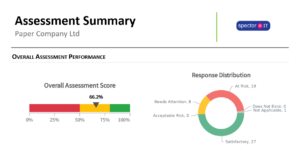
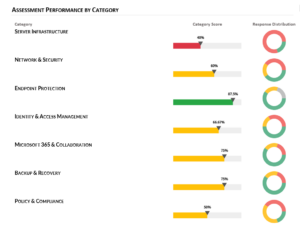
Every one of our clients receives this. It’s not an optional extra. It’s not reserved for the biggest accounts. It’s the backbone of how we manage every relationship, because without it, you’re guessing. And guessing with technology budgets is an expensive habit.
Why strategic IT management changes the conversation
When you have a scorecard and a roadmap, the conversation with your IT provider changes completely.
It also changes the budget conversation. Technology spend stops feeling like a black hole and starts feeling like an investment with a clear return. You can see what we’re recommending, why it matters, what it costs, and what happens if you don’t do it. That’s not a sales pitch. That’s information you need to make good decisions.
They challenge the recommendations. They ask questions. They push back when something doesn’t make sense. That’s exactly how it should work. Shared responsibility means the strategy is a partnership, not a prescription.
The questions worth asking
If you’re evaluating whether you’re getting strategic value from your IT provider, these questions will tell you.
Do you have a named account manager or technical account manager? When was your last strategic review? Do you have a technology scorecard, and do you know your current score? Is there a documented roadmap with prioritised, costed initiatives? Are your IT investments tied to business goals, or are they just responses to things that broke?
If most of those draw a blank, the strategic layer is missing. And that’s the layer that turns IT from a cost you tolerate into a function that actively supports your business.
What’s next?
| Want to see what strategic IT management looks like?
Our sample Strategic Business Review shows how a detailed technology assessment turns into clear priorities and an IT roadmap. Download it below to see what strategic IT management looks like in practice
|

